Leave a Message

Thank you for your message. I will be in touch with you shortly.

Explore Properties

Waterfront Home Terms Naples Buyers Should Know

January 15, 2026

Shopping for a waterfront home in Aqualane Shores and feeling lost in the listing jargon? You’re not alone. If you boat, fish, or simply want a hassle-free route to the Gulf, the details behind docks, lifts, depths, and permits matter. In this guide, you’ll learn the key terms Naples buyers should know, how Aqualane Shores access works, and what to verify before you write an offer. Let’s dive in.

Aqualane Shores boating basics

Aqualane Shores sits on residential canals and Naples Bay, with typical access to open water via the marked channels to Gordon Pass. When you see “Gulf access,” it refers to a navigable route through local waterways, not direct ocean frontage. Because water depth and conditions vary by canal and bay frontage, it pays to confirm your property’s exact route and any constraints along the way.

Key waterways you’ll use include your private canal, Naples Bay, federal and state-marked channels, and Gordon Pass. Depths and navigational aids can differ by location. Before closing, you should verify low-tide depths, turning room, and whether any local rules or permits affect your dock or lift.

Key waterfront terms to read with confidence

Docks and piers

  • Dock vs. pier: A dock is a platform where a vessel is secured. In listings, “dock” and “pier” are often used interchangeably. Confirm that the dock is tied to the property record and the permitted length.
  • Fixed (pile) dock: Built on permanent pilings with a fixed height. Stable to walk on, but boarding can be harder at low or high tide depending on your boat’s freeboard.
  • Floating dock: Rises and falls with the water on guides or rollers. Helpful where tides and storm surge vary, and often easier to adapt to different boat sizes.
  • Finger pier/finger dock: A narrow side extension off a main dock that lets you berth boats along both sides. Longer fingers can help in narrower frontages.
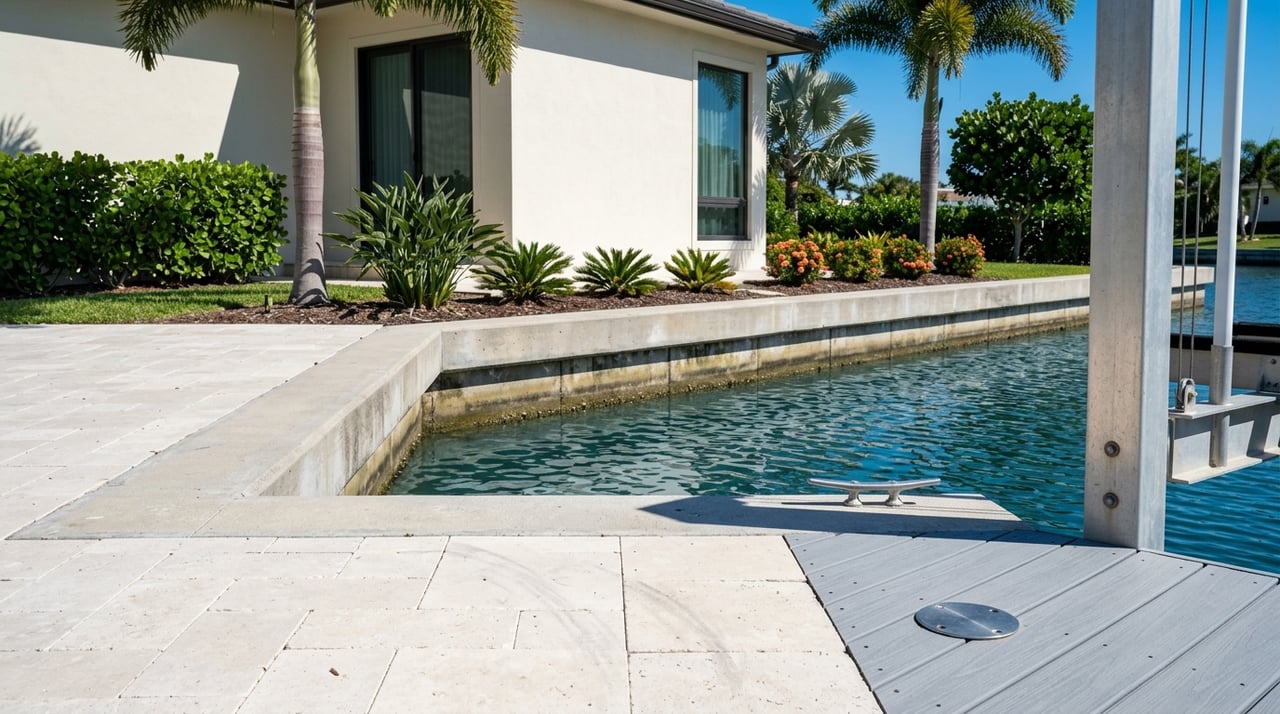
  • Seawall/bulkhead: A vertical wall at the waterline that protects land from erosion and marks the edge of the property. In Florida, waterfront owners typically maintain their own seawalls; ask for age, condition, and repair records.
  • Riprap: Rock placed at the shoreline for erosion control. It can impact durability and how repairs are handled compared with a concrete seawall.

Boat lifts and capacity

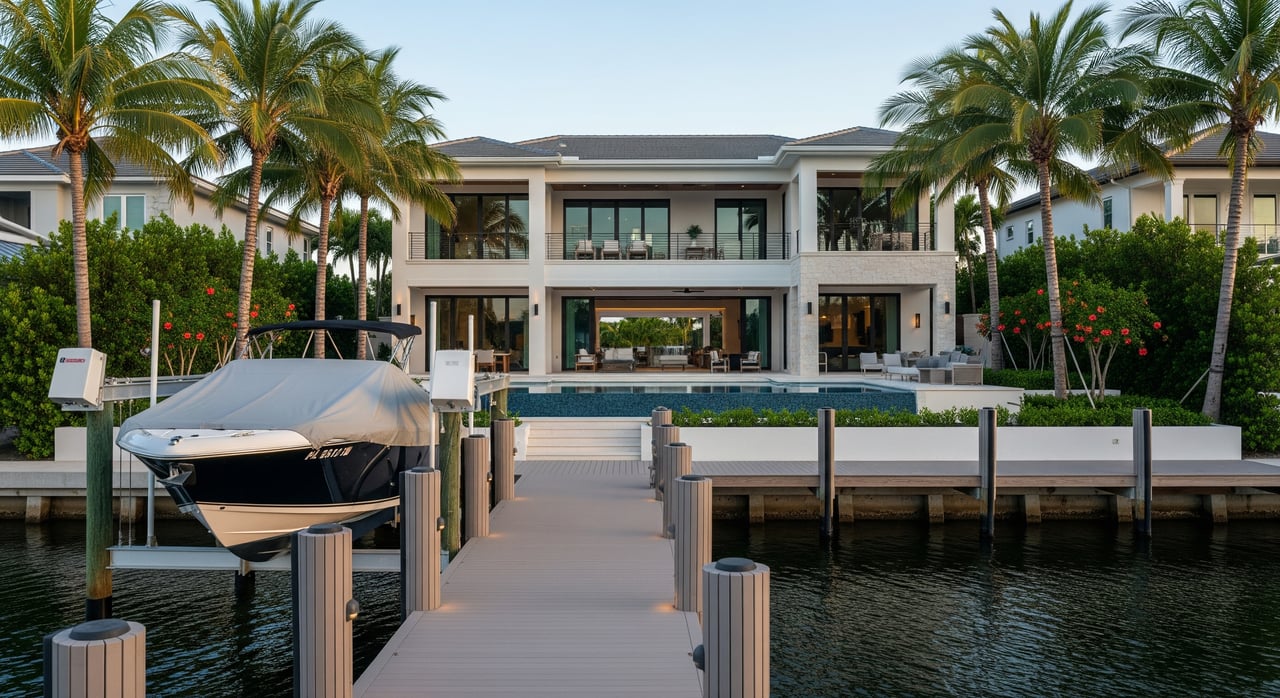
  • Boat lift (general): Raises the boat out of the water to reduce fouling and corrosion and make boarding easier. In Aqualane Shores, many listings note a lift; verify it is permitted and operational.
  • Common types:
    • Platform/cradle systems for general storage.
    • Hydraulic or vertical lifts that raise a cradle straight up.
    • Post/pile lifts for heavier vessels using cross beams and a cradle.
    • PWC lifts for jet skis.
  • What to confirm: Rated capacity, condition, and power source. Match lift rating to your vessel and confirm the permit details and any maintenance records.

Vessel dimensions that matter

  • Length overall (LOA): Total length of the boat. Helps match your vessel to the permitted dock length.
  • Beam: Width of the vessel. Determines whether you can berth comfortably between pilings or along finger piers.
  • Draft: Depth from the waterline to the bottom of the keel. Verify low-tide depth at the dock and along your route.
  • Freeboard: Distance from the waterline to the deck. Impacts how a fixed dock aligns for safe boarding.

Canal width and depth

Canal width influences turning room and maximum practical boat size. Depth should be checked at low tide to avoid grounding and ensure safe passage. In Aqualane Shores, canals are residential in scale, so larger vessels may require careful planning for turning basins and docking.

  • Ask for recent soundings or the quoted depth at mean low water.
  • Verify any known shoaling trends or dredging history in the canal or adjacent channel.

Bridge clearance and air draft

  • Air draft: The height from the waterline to the boat’s highest fixed point.
  • Bridge clearance: The vertical clearance beneath a bridge.

If your Gulf route involves bridges, air draft limits can matter, especially for vessels with towers or masts. In greater Naples, many routes use marked channels without fixed bridge constraints, but always confirm your planned path and clearances.

Tidal datums you will see

  • Mean low water (MLW): A baseline used on charts to show depths. Depth at MLW is the conservative yardstick for safe passage.
  • Mean high water (MHW): Often referenced for structure elevations and legal baselines. Dock heights and dredging needs can be tied to these datums.

Rights and submerged lands

  • Sovereign submerged lands: State-owned bottoms beneath navigable waters. Private docks that extend over these lands often require Florida Department of Environmental Protection authorization or a lease.
  • Riparian rights: Waterfront ownership privileges that allow access and reasonable use, subject to public trust and state rules. You still need permits before altering submerged lands.

Always verify that any existing dock or lift has the proper approvals and that any required leases or authorizations are current.

Gulf access defined for Aqualane Shores

  • Direct Gulf access: A route from your dock to the Gulf that is navigable for typical recreational craft without locks or low fixed obstructions.
  • Restricted access: Limits caused by narrow canals, low bridges, shoaling in channels, or insufficient depth.

In Aqualane Shores, most owners reach the Gulf via Naples Bay and Gordon Pass. Confirm that the route works for your vessel’s draft and height, and ask for any recent dredging updates.

Permits, ownership, and rules in Collier County

Permits and approvals

  • Collier County: Permits for new or modified docks, lifts, and seawalls, plus code enforcement. Request copies of permits, as-built drawings, and any recorded easements.
  • Florida Department of Environmental Protection (FDEP): Oversees structures on sovereign submerged lands, seagrass protections, and coastal standards.
  • U.S. Army Corps of Engineers (USACE): Regulates work in navigable waters, including certain dredge and fill activities.
  • Other agencies: Endangered species reviews may involve federal wildlife agencies. Neighborhood or HOA approvals may also apply.

Ownership and maintenance

Seawalls and docks are commonly the owner’s responsibility. Confirm ownership in title documents, including any bulkhead maintenance agreements. Expect recurring costs for seawall repairs, erosion control, dock upkeep, and lift service.

Easements and restrictions

Check recorded easements, bulkhead or setback lines, and any covenants that limit dock dimensions or vessel types. If there is an HOA or neighborhood board, ask for their architectural or marine guidelines.

Environmental constraints

Seagrass and mangrove protections can affect dock length or placement and make dredging more complicated. Private dredging typically requires approvals from USACE and FDEP and can be costly and time limited.

Insurance and inspections

Insurers may require proof that docks and seawalls are permitted and structurally sound. Some policies exclude failing structures or charge higher premiums for deficiencies. Plan for professional inspections of concrete, wood components, pilings, tie-backs, and lifts.

Buyer due diligence checklist

Use this list to translate listing remarks into action items:

  1. Confirm whether the dock is private, shared, or a marina slip, and whether it is deeded to the lot.
  2. Request all recorded permits or leases for the dock, lift, and seawall.
  3. Identify dock type (fixed or floating), overall length, and any finger piers or slips.
  4. Verify lift type, rated capacity, condition, and permitted power source.
  5. Ask for depth at the dock at mean low water or a recent sounding.
  6. Confirm any limits on vessel size (LOA, beam, draft) based on permits, HOA rules, or physical canal constraints.
  7. Review recorded easements, bulkhead lines, or setback restrictions.
  8. Ask about shoaling or dredging issues in the canal or route to the Gulf.
  9. Document seawall age and condition, including any recent or pending repairs.
  10. Check for open code violations or expired permits tied to the waterfront improvements.

Smart strategies for out-of-state buyers

  • Request as-is documentation: all permits, surveys with bulkhead lines, inspection reports, and HOA or neighborhood rules.
  • Hire a local marine contractor or surveyor to evaluate depths, turning room, and structural integrity before closing.
  • Review current nautical charts along with any recent dredging or channel maintenance updates, especially near Gordon Pass.
  • Ask the listing agent for canal-specific history on shoaling and whether private dredging is common or restricted.

Work with a local advocate

Waterfront living in Aqualane Shores is exceptional, but the details matter. When you understand docks, lifts, depths, and the permitting landscape, you can buy with confidence and avoid costly surprises. If you want a clear plan tailored to your boat, route, and lifestyle, connect with Angela Graziano for boutique, concierge-level guidance from search to close.

FAQs

What does “Gulf access” mean for Aqualane Shores homes?

  • It means your vessel can reach the Gulf via local waterways, typically Naples Bay to Gordon Pass. Confirm depths, any bridge clearances, and recent channel conditions for your boat.

How do I know if a dock or lift is permitted in Collier County?

  • Ask for permit records, as-built drawings, and any submerged lands authorizations. Verify with county permitting and state agencies during due diligence.

Can my larger boat turn safely in an Aqualane Shores canal?

  • It depends on canal width, turning basins, and your vessel’s LOA and beam. Have a marine professional assess turning room and depth at low tide.

Who maintains the seawall at a Naples waterfront home?

  • The property owner is typically responsible. Confirm ownership in title documents and request repair history and inspection reports.

Are boathouses common on these canals?

  • Fully enclosed boathouses are less common and may face permitting limits on tidal waters. Check local and state rules before planning one.

What happens if the existing dock or seawall lacks permits?

  • Unpermitted work can trigger retroactive approvals, required upgrades, or removal. Address it before closing with written disclosures and agency verification.

Work With Angela

Get assistance in determining current property value, crafting a competitive offer, writing and negotiating a contract, and much more. Contact her today.